Classical vs FIDE Champions: The Split in Chess
The split between the Classical and FIDE World Chess Championships from 1993 to 2006 remains one of the most controversial periods in chess history. This article explores how the divide began, why the two titles followed different formats and time controls, and how players like Garry Kasparov, Vladimir Kramnik, and Veselin Topalov became symbols of competing visions for the world championship. From long classical matches to fast-paced knockout events, the era reshaped modern chess and changed how the game’s highest title was understood.
#Classical and FIDE World Champions: The Split That Changed Chess
By Elena Kovarik
For more than a century, the World Chess Championship followed a relatively clear tradition. The reigning champion defended the title in a head-to-head match, and the winner became the new king of chess. From Wilhelm Steinitz through Emanuel Lasker, José Raúl Capablanca, Alexander Alekhine, and later Soviet champions such as Mikhail Botvinnik and Anatoly Karpov, the lineage seemed unbroken.
Then came 1993.
What followed was one of the most controversial periods in chess history: thirteen years with two competing world champions, two competing systems, and constant debate over legitimacy.
The Championship Before the Split
The modern championship system was largely shaped after World War II by FIDE, the international governing body for chess. FIDE organized qualification cycles, Candidates tournaments, and championship matches. Although formats changed over time, the central idea remained stable: challengers earned the right to face the reigning champion in a long match.
This structure created some of the most famous rivalries in chess history. Bobby Fischer against Boris Spassky in 1972 became a Cold War cultural event as much as a sporting contest. Later, the fierce clashes between Garry Kasparov and Karpov defined the 1980s.
By the early 1990s, Kasparov was the dominant figure in world chess. Brilliant, outspoken, and increasingly frustrated with FIDE leadership, he believed the federation mishandled elite chess and commercial opportunities. Those tensions eventually exploded into open conflict.
1993: The Breakaway Championship
The split began when Kasparov and English grandmaster Nigel Short qualified for the 1993 championship match. Instead of playing under FIDE, the two players announced they would organize the match independently through the newly created Professional Chess Association.
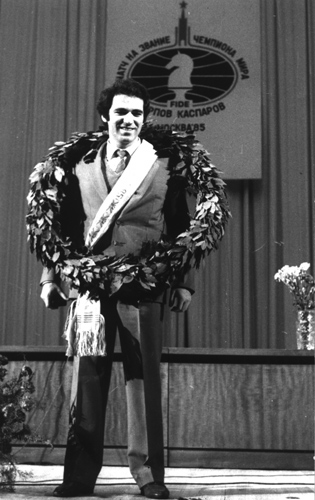
FIDE reacted immediately. Both players were stripped of official status, and FIDE organized its own championship match between Karpov and Jan Timman, who had lost to Short in the Candidates cycle.
Suddenly, chess had two champions.
Kasparov defeated Short in London and retained what many considered the traditional or “Classical” title, since he had beaten the previous champion and defended the crown in the historic match lineage dating back to Steinitz. Meanwhile, Karpov became the official FIDE World Champion.
For fans, journalists, and historians, the situation was deeply confusing. One side had institutional authority. The other had continuity and, arguably, the strongest player in the world.
Two Different Philosophies of Championship Chess
As the years passed, the divide became more than political. The two championships evolved into very different tests of chess skill.
The Classical title remained centered on long matches. Preparation was exhaustive. Players spent months analyzing openings, studying psychological tendencies, and preparing specific strategies for a single opponent. Matches were often tense, slow-burning affairs where one small strategic idea could shape several games.
The FIDE championship moved in the opposite direction. Seeking a more television-friendly format, FIDE experimented with knockout tournaments and shorter matches. Instead of preparing for one rival over several weeks, players had to survive a gauntlet of opponents with little rest and minimal preparation time.
The contrast produced very different champions.
The Classical lineage went from Kasparov to Vladimir Kramnik after Kramnik defeated Kasparov in 2000. Kramnik’s victory became one of the defining moments of modern chess history.
The FIDE line, meanwhile, crowned a series of champions including Karpov, Alexander Khalifman, Viswanathan Anand, Ruslan Ponomariov, Rustam Kasimdzhanov, and Veselin Topalov.
Kasparov vs. Kramnik: The End of an Era
The 2000 Classical World Championship match in London carried enormous historical weight. Kasparov had dominated world chess for fifteen years and entered the match as a heavy favorite. Many expected him to overwhelm Kramnik with superior preparation and dynamic play.
Instead, Kramnik produced one of the greatest strategic performances in championship history.
Rather than challenge Kasparov in sharp tactical battles, Kramnik neutralized him. His use of the Berlin Defense in the Ruy Lopez frustrated Kasparov throughout the match and became one of the most influential opening developments in elite chess. Kasparov failed to win a single game.
Chess Game
[Event "Classical World Championship Match"]
[Site "London ENG"]
[Date "2000.10.10"]
[EventDate "2000.10.08"]
[Round "2"]
[Result "1-0"]
[White "Vladimir Kramnik"]
[Black "Garry Kasparov"]
[ECO "D85"]
[WhiteElo "2770"]
[BlackElo "2849"]
[PlyCount "79"]

1. d4 Nf6 2. c4 g6 3. Nc3 d5 4. cxd5 Nxd5 5. e4 Nxc3
6. bxc3 Bg7 7. Nf3 c5 8. Be3 Qa5 9. Qd2 Bg4 10. Rb1 a6
11. Rxb7 Bxf3 12. gxf3 Nc6 13. Bc4 O-O 14. O-O cxd4 15. cxd4 Bxd4
16. Bd5 Bc3 17. Qc1 Nd4 18. Bxd4 Bxd4 19. Rxe7 Ra7 20. Rxa7 Bxa7
21. f4 Qd8 22. Qc3 Bb8 23. Qf3 Qh4 24. e5 g5 25. Re1 Qxf4
26. Qxf4 gxf4 27. e6 fxe6 28. Rxe6 Kg7 29. Rxa6 Rf5 30. Be4 Re5
31. f3 Re7 32. a4 Ra7 33. Rb6 Be5 34. Rb4 Rd7 35. Kg2 Rd2+
36. Kh3 h5 37. Rb5 Kf6 38. a5 Ra2 39. Rb6+ Ke7 40. Bd5 1-0
The symbolism mattered as much as the result. Kasparov represented the explosive, aggressive energy of late Soviet chess culture. Kramnik’s approach was cooler, more restrained, and deeply positional. The match felt like the close of one chess era and the beginning of another.
It also reinforced the identity of the Classical title as a contest defined by long preparation, endurance, and match strategy.
The FIDE Knockout Era
While the Classical championship focused on prestige matches, the FIDE title increasingly resembled a high-pressure survival tournament.
The knockout championships produced unpredictability rarely seen in earlier world championship cycles. Elite players could be eliminated quickly after a bad rapid tiebreak or a single poor game. Critics argued that shorter matches introduced too much randomness into determining a world champion.
Supporters countered that the format was democratic and exciting. Instead of one dominant champion controlling the title for years, more players had genuine opportunities to compete for the crown.
The knockout era also reflected broader changes in professional chess. Faster time controls, growing internet coverage, and commercial pressures pushed the game toward formats that were easier for spectators to follow.
This period helped establish Anand and Topalov as major global stars and broadened chess beyond its old Soviet-centered identity. Players from India, Bulgaria, Uzbekistan, and Ukraine now stood at the center of the championship story.
Politics, Legitimacy, and Endless Debate
No discussion of the split era is complete without acknowledging the bitterness surrounding it.
Supporters of the Classical title argued that legitimacy could only come through defeating the reigning champion in a match. To them, the lineage from Steinitz through Kasparov and Kramnik represented the authentic championship tradition.
FIDE supporters emphasized institutional legitimacy. The federation governed international chess, organized qualification systems, and officially sanctioned the championship. From that perspective, the FIDE title was the real world championship.
The debate became emotional because both sides had valid arguments. Kasparov was widely regarded as the strongest player alive, but FIDE controlled the official structure of world chess. Fans often treated the split almost like a religious divide within the chess community.
For younger players entering the game during those years, the existence of two champions was simply normal. For older fans, it felt like a fracture in the historical continuity of the sport.
Reunification in 2006
The division finally ended in 2006.
Kramnik, holder of the Classical title, faced Topalov, the reigning FIDE champion, in a reunification match in Elista, Kalmykia. The contest became infamous for controversy, including the so-called “Toiletgate” dispute over Kramnik’s bathroom visits and accusations of cheating.
Chess Game
[Event "World Championship Match"]
[Site "Elista RUS"]
[Date "2006.10.13"]
[EventDate "?"]
[Round "16"]
[Result "1-0"]
[White "Vladimir Kramnik"]
[Black "Veselin Topalov"]
[ECO "D47"]
[WhiteElo "?"]
[BlackElo "?"]
[PlyCount "89"]

1.d4 d5 2.c4 c6 3.Nf3 Nf6 4.Nc3 e6 5.e3 Nbd7 6.Bd3 dxc4 7.Bxc4 b5 8.Be2
Bb7 9.O-O Be7 10.e4 b4 11.e5 bxc3 12.exf6 Bxf6 13.bxc3 c5 14.dxc5 Nxc5 15.Bb5+ Kf8
16.Qxd8+ Rxd8 17.Ba3 Rc8 18.Nd4 Be7 19.Rfd1 a6 20.Bf1 Na4 21.Rab1 Be4 22.Rb3 Bxa3 23.Rxa3
Nc5 24.Nb3 Ke7 25.Rd4 Bg6 26.c4 Rc6 27.Nxc5 Rxc5 28.Rxa6 Rb8 29.Rd1 Rb2 30.Ra7+ Kf6
31.Ra1 Rf5 32.f3 Re5 33.Ra3 Rc2 34.Rb3 Ra5 35.a4 Ke7 36.Rb5 Ra7 37.a5 Kd6 38.a6
Kc7 39.c5 Rc3 40.Raa5 Rc1 41.Rb3 Kc6 42.Rb6+ Kc7 43.Kf2 Rc2+ 44.Ke3 Rxc5 45.Rb7+ 1-0
Despite the chaos surrounding the event, Kramnik won the match and unified the titles. For the first time since 1993, chess again had a single undisputed world champion.
The reunification restored continuity to the championship and paved the way for the modern era that later included Anand, Magnus Carlsen, and today’s generation of elite players.
Why the Split Era Still Matters
The years from 1993 to 2006 remain one of the most fascinating chapters in chess history because they forced the chess world to confront difficult questions.
What makes a champion legitimate: tradition or institutions?
Should the world championship prioritize long-form match play or broader tournament accessibility?
Is the strongest player always the most deserving champion, or should the title reward adaptability across many formats?
The split era never produced universally accepted answers. But it transformed professional chess permanently.
Modern championship cycles still carry traces of both traditions. The prestige of long matches remains central to the title, yet rapid tiebreaks, tournament formats, and commercial presentation now play a far larger role than they once did.
The period also produced some of the richest chess ever played, from Kasparov’s attacking brilliance to Kramnik’s strategic precision and Anand’s universal style.
More than a political dispute, the split era became a turning point in how the chess world understood competition, legitimacy, and the meaning of a world champion.
You can play through the games of the world chess champions on Guess The Move page.