Gukesh Dommaraju: The Youngest World Chess Champion
Gukesh Dommaraju's rise offers more than inspiration: it gives club players a practical model for calculation, resilience, opening discipline, and endgame patience. This guide turns his strengths into training habits you can use in your own games.
Gukesh Dommaraju: The Rise of the Youngest World Champion
By Rafael Cortez
When Gukesh Dommaraju became World Chess Champion, the achievement carried historical weight far beyond a single tournament victory. At just 18 years old, Gukesh became the youngest undisputed World Chess Champion in history, surpassing the long-standing record held by Garry Kasparov, who won the title at age 22 in 1985.
For many chess fans, the victory represented the arrival of a new era. India had already produced one world champion in Viswanathan Anand, whose influence helped ignite a chess boom across the country. Gukesh now became the leading figure of the next generation: fearless, deeply prepared, calm under pressure, and capable of defeating the strongest players in the world before reaching adulthood.
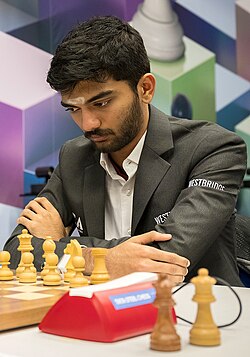
But Gukesh’s rise was not built on hype alone. It was built on difficult games, elite tournaments, and remarkable performances against experienced grandmasters who had spent years competing at the highest level.
A Prodigy From Chennai
Born in Chennai in 2006, Gukesh grew up in the same city that produced Anand, often called the father of modern Indian chess. By the time Gukesh was a teenager, India had become one of the most important centers of world chess, producing a wave of elite young talents.
Even among that extraordinary generation, Gukesh stood out.
He earned the grandmaster title at age 12, becoming one of the youngest grandmasters in chess history. His progress afterward was unusually fast even by modern standards. While many prodigies struggle during the transition from junior competition to elite chess, Gukesh adapted quickly to playing world-class opposition.
His style also drew attention. Unlike many young players who rely heavily on tactical chaos, Gukesh showed maturity in long positional games and difficult endgames. He was willing to defend unpleasant positions patiently and equally willing to press small advantages for hours.
The Candidates Tournament Breakthrough
The turning point came at the 2024 Candidates Tournament in Toronto.
The Candidates has historically been one of the most demanding events in chess. It determines who earns the right to challenge the reigning world champion, and the tournament’s history includes legends such as Mikhail Tal, Tigran Petrosian, and Kasparov.
At only 17 years old, Gukesh entered the event as one of the youngest participants ever. Many observers expected him to gain experience rather than seriously contend for first place.
Instead, he won the tournament outright.
His performance was defined not by reckless attacking chess but by composure. Throughout the event, Gukesh handled pressure with remarkable calm, defeating elite opponents and avoiding the emotional collapses that often decide long tournaments.
By winning the Candidates, he became the youngest challenger in modern championship history.
Chess Game
[Event "World Championship Candidates"]
[Site "Toronto CAN"]
[Date "2024.04.20"]
[EventDate "2024.04.04"]
[Round "13.4"]
[Result "1-0"]
[White "D Gukesh"]
[Black "Alireza Firouzja"]
[ECO "C65"]
[WhiteElo "2743"]
[BlackElo "2760"]
[Source "Lichess"]
[PlyCount "126"]

1. e4 e5 2. Nf3 Nc6 3. Bb5 Nf6 4. d3 Bc5 5. O-O Nd4
6. Nxd4 Bxd4 7. Nd2 c6 8. Bc4 d6 9. c3 Bb6 10. Bb3 a5
11. Nc4 Ba7 12. Ne3 O-O 13. Qf3 d5 14. Bc2 g6 15. Re1 Be6
16. exd5 cxd5 17. h3 Re8 18. Ba4 e4 19. dxe4 dxe4 20. Qe2 Re7
21. Nf1 Qc7 22. Bb3 a4 23. Bxe6 Rxe6 24. Be3 a3 25. c4 Nh5
26. g3 Bc5 27. b3 f5 28. Bxc5 Qxc5 29. Rad1 Rf8 30. Rd5 Qe7
31. f4 Nf6 32. Rd2 g5 33. Ne3 gxf4 34. gxf4 Qf7 35. Kh2 Nh5
36. Qf2 Rg6 37. Rd5 Ng7 38. Red1 Rh6 39. Rg1 Rg6 40. Rgd1 Rh6
41. Rg1 Rg6 42. Qh4 Rxg1 43. Kxg1 Kh8 44. Kf2 Rg8 45. Qg5 Qg6
46. Qxg6 hxg6 47. Rd6 Re8 48. Rxg6 Ne6 49. Nd5 Nd4 50. Rb6 Nc2
51. Rxb7 Re6 52. Re7 Rh6 53. c5 Nd4 54. Kg2 Rg6+ 55. Kf2 Rh6
56. b4 Rxh3 57. Kg2 Rh6 58. Rb7 Kg8 59. b5 Kf8 60. b6 Rg6+
61. Kf2 Rh6 62. Rc7 Rh2+ 63. Kg3 1-0
The World Championship Match
Gukesh’s championship victory placed him into one of chess’s oldest traditions: the head-to-head world title match.
World Championship matches have always carried a unique psychological atmosphere. Unlike tournaments, where a loss can be repaired in the next round, every game in a title match becomes part of a larger narrative. Momentum matters. Preparation matters. Nerves matter.
The match showcased many of the qualities that had already defined Gukesh’s rise:
calm defensive technique, precise opening preparation, resilience after difficult games, and confidence in long endgames.
Several games became especially important in shaping the course of the match. In tense strategic positions, Gukesh repeatedly demonstrated an ability rare for someone so young: he remained patient when the position demanded patience and ambitious when opportunities appeared.
His victories were not based on flashy sacrifices alone. Many came from sustained pressure and technical accuracy, qualities more commonly associated with veteran champions.
That combination made his triumph historically unusual. Chess history has seen young attacking prodigies before, but far fewer teenage champions capable of balancing aggression with positional maturity.
Chess Game
[Event "Ding - Gukesh World Championship Match"]
[Site "Singapore SIN"]
[Date "2024.11.26"]
[EventDate "2024.11.25"]
[Round "3.1"]
[White "Gukesh D"]
[Black "Ding, Liren"]
[Result "1-0"]
[WhiteFideId "46616543"]
[WhiteTitle "GM"]
[WhiteElo "2783"]
[BlackFideId "8603677"]
[BlackTitle "GM"]
[BlackElo "2728"]
[ECO "D02"]
[Opening "Queen's Pawn Game: Symmetrical Variation"]
[Source "Lichess"]

1. d4 Nf6 2. Nf3 d5 3. c4 e6 4. cxd5 exd5 5. Nc3 c6
6. Qc2 g6 7. h3 Bf5 8. Qb3 Qb6 9. g4 Qxb3 10. axb3 Bc2
11. Bf4 h5 12. Rg1 hxg4 13. hxg4 Nbd7 14. Nd2 Rg8 15. g5 Nh5
16. Bh2 Rh8 17. f3 Ng7 18. Bg3 Rh5 19. e4 dxe4 20. fxe4 Ne6
21. Rc1 Nxd4 22. Bf2 Bg7 23. Ne2 Nxb3 24. Rxc2 Nxd2 25. Kxd2 Ne5
26. Nd4 Rd8 27. Ke2 Rh2 28. Bg2 a6 29. b3 Rd7 30. Rcc1 Ke7
31. Rcd1 Ke8 32. Bg3 Rh5 33. Nf3 Nxf3 34. Kxf3 Bd4 35. Rh1 Rxg5
36. Bh3 f5 37. Bf4 Rh5 1-0
The Historical Importance of His Age
Age has always shaped how chess champions are remembered.
When Kasparov defeated Anatoly Karpov in 1985 at age 22, he was celebrated as the youngest world champion ever. The record stood for nearly forty years and survived multiple generations of elite talent.
Gukesh breaking that record at 18 immediately placed him into historic company.
The achievement also reflected broader changes in modern chess. Young players today grow up with powerful engines, online competition, and enormous databases of games. Elite preparation begins earlier than ever before. Yet even in this environment, becoming world champion as a teenager remained extraordinarily difficult.
The pressure surrounding the modern title is immense. Every game is analyzed instantly by engines and millions of spectators online. Mistakes become global headlines within minutes. For a player barely out of school to navigate that environment successfully made Gukesh’s accomplishment even more remarkable.
India’s New Chess Generation
Gukesh’s rise also symbolized a major shift in world chess geography.
For decades, elite chess was dominated by Soviet and Eastern European players. Anand’s success helped establish India as a major chess nation, but the generation that followed him transformed the scale entirely.
Players such as R Praggnanandhaa, Arjun Erigaisi, and Nihal Sarin emerged alongside Gukesh as part of a remarkable wave of Indian talent.
Among them, Gukesh became the player who reached the summit first.
His championship victory therefore carried national significance as well. To many Indian fans, it represented the continuation of the path Anand had opened decades earlier.
The Style of a Modern Champion
Every world champion eventually becomes associated with a certain image.
Kasparov represented dynamic aggression and opening preparation. Karpov became known for positional control and restriction. Magnus Carlsen built his reputation on relentless endgame pressure and practical decision-making.
Gukesh’s identity as a champion is still developing, but several characteristics already stand out.
He is exceptionally composed for his age. He rarely appears emotionally shaken after losses or missed opportunities. His games also show a willingness to play long technical positions rather than forcing complications unnecessarily.
Perhaps most importantly, he appears comfortable carrying expectations. By the time he challenged for the title, he was already treated as one of the future faces of world chess. Instead of shrinking under that attention, he seemed to grow stronger.
A New Era Begins
Every world champion inherits history, but the youngest champions also redefine it.
Gukesh’s rise connected several eras of chess at once: the championship traditions stretching back to Steinitz, Anand’s transformation of Indian chess, and the computer-driven generation that grew up with modern engines and online preparation.
At 18 years old, he achieved something many elite players spend their entire lives chasing unsuccessfully. Whether his reign becomes long or short, his name is already permanently attached to one of the greatest milestones in chess history: the youngest World Chess Champion the game has ever seen.
You can play through the games of Gukesh on the IgniteChess Guess The Move