Faustino Oro: The Argentine Chess Prodigy
Faustino Oro is one of the most extraordinary young talents in modern chess. This biography-style guide explains his rise, key achievements.
Faustino Oro: Argentina’s Young Chess Prodigy
By Elena Kovarik
Faustino Oro became one of the most talked-about young players in world chess before reaching his teenage years. Born on October 14, 2013, in Buenos Aires, Argentina, Oro rose to international attention through a combination of extraordinary online performances, rapid rating progress, and record-breaking achievements at an age when most chess players are only beginning serious competition.
Nicknamed the “Messi of chess” by many fans and media outlets, Oro quickly became a symbol of Argentina’s hopes for a new global chess star. The comparison reflected more than nationality. Like Lionel Messi, Oro appeared to possess unusual natural talent at an exceptionally young age.
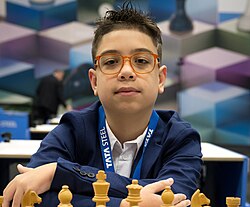
Yet what made his rise especially remarkable was not only his speed of improvement, but the level of competition he was already surviving against.
A Rapid Rise During the Online Chess Boom
Oro’s development coincided with the massive online chess boom of the early 2020s. Millions of new players entered online platforms during that period, and young talents suddenly had access to constant competition against strong opposition from around the world.
Oro adapted to that environment almost immediately.
His online results began attracting attention after he defeated titled players and climbed rapidly through youth and blitz ratings. He eventually crossed the 3000 rating mark on Chess.com in blitz and bullet formats while still a child, an achievement that placed him among the strongest young online players ever seen.
One of the moments that brought him global recognition came in 2024, when he defeated Magnus Carlsen in an online bullet game. Although bullet chess is very different from classical tournament play, victories over Carlsen always attract enormous attention, especially when achieved by someone barely ten years old.
The game reinforced the growing belief that Oro was not simply a promising junior, but a genuinely extraordinary talent.
Becoming the Youngest International Master
Oro’s over-the-board achievements soon became even more significant than his online fame.
In 2024, he became the youngest International Master in chess history at the time, earning the title at just 10 years, 8 months, and 16 days old. That achievement placed him ahead of many legendary prodigies on the same developmental timeline.
The record mattered because International Master norms require consistent performance against experienced professional players in serious tournament conditions. Unlike online blitz, these events test preparation, endurance, concentration, and emotional resilience over many hours.
For such a young player to achieve those standards suggested that Oro’s talent extended far beyond speed chess instincts.
Crossing 2500 and Reaching Grandmaster Level
As Oro’s career progressed, attention shifted from age records toward his long-term potential in elite classical chess.
By 2025 and 2026, he crossed the 2500 FIDE rating threshold and completed the requirements for the grandmaster title at the Sardinia International Chess Festival in May 2026. The result made him the second-youngest player in history to qualify for the GM title.
He also achieved another historic milestone by becoming the youngest player ever to win a match at the FIDE World Cup.
These accomplishments placed Oro into a very small group of players whose early careers drew comparisons with some of the greatest prodigies in chess history.
The Style of a Modern Prodigy
Young chess talents are often associated with tactical aggression, but Oro’s games reveal something more complete.
He is comfortable in dynamic positions where calculation matters, but he also shows strong practical instincts in unclear middlegames. Rather than forcing attacks at every opportunity, Oro often builds pressure gradually through active piece play and initiative.
Many of his best games share common characteristics:
rapid development, active coordination, willingness to enter complications, and confidence in sharp tactical positions.
At the same time, he often continues pressing after gaining an advantage rather than simplifying immediately. That approach reflects the modern generation of elite players who grew up in constant contact with engines and online competition.
Chess Game
[Event "Legends and Prodigies"]
[Site "Madrid ESP"]
[Date "2025.09.19"]
[EventDate "2025.09.17"]
[Round "?"]
[Result "0-1"]
[White "Miaoyi Lu"]
[Black "Faustino Oro"]
[ECO "C48"]
[WhiteElo "2449"]
[BlackElo "2464"]
[PlyCount "60"]

1. e4 e5 2. Nf3 Nf6 3. Nc3 Nc6 4. Bb5 Bd6 5. d3 O-O
6. O-O h6 7. Ba4 Re8 8. Be3 Ng4 9. h3 Nf6 10. g4 Bb4
11. g5 hxg5 12. Nxg5 Ne7 13. f4 exf4 14. Bxf4 Ng6 15. Qf3 c6
16. Rae1 d5 17. e5 Nh7 18. Nxf7 Qh4 19. Bg3 Bc5+ 20. Bf2 Rf8
21. Bxc5 Ng5 22. Qg2 Nxh3+ 23. Kh1 Rxf7 24. Bb3 Nf2+ 25. Kg1 Nf4
26. Bxf2 Nh3+ 27. Kh1 Nxf2+ 28. Kg1 Bh3 29. Qg6 Bxf1 30. e6 0-1
Argentina’s New Chess Hope
Argentina has a proud chess history dating back decades, including legendary players such as Miguel Najdorf and major international tournaments held in Buenos Aires throughout the twentieth century.
For many Argentine chess fans, Oro represents the country’s strongest young talent in generations.
His rise also arrived during a broader global shift in chess culture. Elite talent is now emerging from more countries and at younger ages than ever before. Online platforms, engine preparation, and international junior events have accelerated development dramatically.
In that environment, Oro became one of the most recognizable symbols of the new generation.
The Pressure of Early Fame
Chess history is filled with prodigies whose careers developed in very different ways.
Some teenage stars became world champions. Others struggled with expectations, pressure, or the transition from junior success to elite adult competition. Because of that, young talents often face enormous public attention long before their careers are fully formed.
Oro’s rapid fame brought exactly those pressures.
Every major tournament result now attracts global discussion. His games are analyzed instantly online, and comparisons with legendary prodigies appear constantly. Managing that attention can be as difficult as the chess itself.
So far, however, Oro has continued progressing steadily despite the spotlight surrounding him.
What Makes Oro Different
Many children can calculate tactics quickly. Far fewer demonstrate the competitive fearlessness Oro has already shown against experienced professionals.
His games often reveal confidence in positions where many young players would become cautious. He appears comfortable defending difficult positions, entering sharp complications, and continuing to search for active opportunities under pressure.
That mentality may ultimately become one of the defining features of his career.
Modern chess increasingly rewards players who combine preparation with practical confidence, especially in fast-changing positions where engines cannot simply “play the game” for the human competitor.
Oro’s style reflects exactly that kind of modern chess instinct.
A Career Still Beginning
At an age when most players are still learning tournament discipline, Faustino Oro has already achieved milestones that place him among the most remarkable young talents in chess history.
Yet his story is still only beginning.
Whether he eventually competes for the World Championship or follows a different path, his rise has already become one of the defining chess stories of the 2020s. His achievements helped reintroduce Argentina into conversations about elite chess talent and demonstrated how dramatically the age profile of top players continues to change.
For chess fans, Oro represents more than records or online fame. He represents the arrival of another generation raised entirely in the modern digital chess world — fearless, fast, and capable of challenging elite players before adulthood itself has fully begun.
You can play through Oro's fames with Guess The Move